Skip to content

The mask is the part of CPAP therapy you feel every night, and a poor fit is the most common reason people stop using their machine. This guide walks through the three mask styles, how to measure your size, how manufacturers recommend fitting a mask, and a few points that matter specifically in the UAE.

Step 1: choose a mask style

  • Nasal pillow masks sit at the nostrils with minimal contact on the face. Good for people who feel claustrophobic, wear glasses in bed or have facial hair. Examples: ResMed AirFit P10 and AirFit P30i.
  • Nasal masks cover the nose only. A balanced choice for most nose breathers, including people on higher pressures. Examples: AirFit N20, AirFit N30i and the Löwenstein CARA nasal.
  • Full face masks cover the nose and mouth. The right choice if you breathe through your mouth, have a blocked nose at night or wake with a very dry mouth. Examples: AirFit F20, AirFit F30i and AirFit F40.

Side sleepers often prefer pillow or cradle designs with the tube connection on top of the head, such as the P30i, N30i and F30i, because the tube does not press into the pillow.

Step 2: find your size

Most ResMed masks come in Small, Medium and Large cushions, and full face masks add a Small-Wide or Wide option. ResMed publishes printable sizing templates for each mask. Print them at actual size with page scaling turned off, then hold the template under the nose so that the flares of both nostrils sit inside the marked area. ResMed's own guidance is that if you fall between two sizes, choose the larger one because it is usually more comfortable. Nasal pillow masks such as the AirFit P10 ship with all three pillow sizes in the box, so you can try each one at home.

If you would rather not measure yourself, send us a photo or your current mask model through the compatibility center and we will suggest a size.

Step 3: fit the mask the way the manufacturer recommends

  1. Fit the mask while lying in your normal sleeping position, not sitting up.
  2. Connect the tube and switch the machine on before the final adjustment, so you are adjusting against therapy pressure.
  3. Keep the straps as loose as possible while still holding a seal. Over-tightening pushes the cushion out of shape and causes leaks and pressure marks.
  4. If air leaks near the eyes or mouth, pull the mask slightly away from your face to let the cushion re-inflate, then settle it back.
  5. Use the mask-fit feature on machines such as the AirSense 10 and 11 to confirm the seal.

UAE-specific points

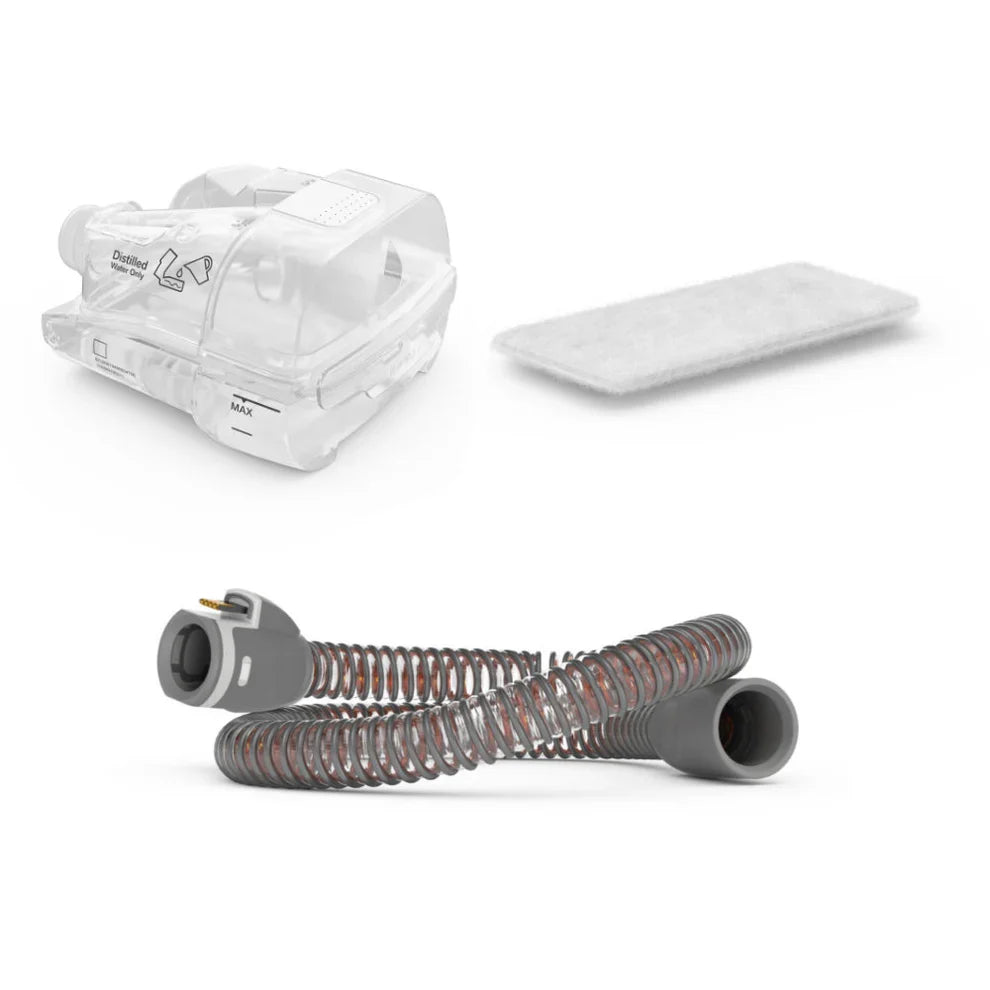
  • Air conditioning dries the air. Bedrooms in Dubai and Abu Dhabi are often at 20 to 22 degrees with very low humidity. Heated humidification and a heated tube such as the ClimateLineAir 11 reduce dry mouth and nasal irritation, which in turn reduces mouth leak.
  • Dust shortens cushion life. Fine dust settles on silicone and reduces the seal. Wipe the cushion daily and inspect it monthly. Our cleaning schedule explains what to replace and when.
  • Machine compatibility. AirMini travel machines use dedicated mask setup packs. Check the compatibility center before ordering a mask for a travel device.

Signs your mask is wrong for you

Red marks on the bridge of the nose, a whistling leak that wakes you, a sore or very dry mouth, or an AHI that is higher than it was during your sleep study all point to a fit or style problem rather than a machine problem. Try loosening the straps first. If that does not help, a different size or style usually does.

Browse all styles in the CPAP masks collection, or message us on WhatsApp with your machine model and how you sleep. This guide is general information and does not replace fitting advice from your clinician or equipment supplier.

Leave a comment

Your email address will not be published. Required fields are marked *