Skip to content

Skipping CPAP for a week of travel undoes a lot of the benefit and leaves you exhausted on holiday or at meetings. The good news is that airlines based in the UAE treat CPAP as medical equipment, and modern machines are small enough to carry on. This guide covers the airline rules as published by Emirates and Etihad, battery limits, security screening, and what to pack.

Airline rules from the UAE

Emirates lists CPAP and PAP devices among the medical items permitted on board for use during the flight, and states they do not count towards your cabin baggage allowance. Emirates no longer requires prior notification or medical verification to use a CPAP in the cabin. If you carry the device into the cabin but do not intend to use it, Emirates asks that any batteries are removed and packed separately. One sleep apnea device may also travel as checked baggage, subject to dangerous goods rules for batteries.

Etihad allows CPAP and BiPAP devices on board without prior medical clearance provided the device carries a manufacturer label showing FAA compliance, does not exceed 56 by 36 by 23 cm, and is used at a seat that does not restrict exits or aisles. Lithium batteries between 100 Wh and 160 Wh need approval at least 48 hours before the flight, with a maximum of two spare batteries. Batteries under 100 Wh do not need approval.

Policies change, so check the airline's medical assistance page when you book and carry a copy of your prescription. Other Gulf carriers such as Qatar Airways and flydubai have similar rules but their own notification periods.

Batteries and power

  • ResMed, Löwenstein and Resvent power supplies accept 100 to 240 V, so a plug adaptor is all you need in most countries.
  • If you want to run the machine on a long flight, use a battery rated under 100 Wh to avoid approval paperwork, and switch humidification off to extend run time.
  • Check that your seat has a power outlet before relying on it. Many economy seats do not.

Airport security

Take the machine out of its bag and place it in a tray like a laptop. A clear plastic bag keeps it clean on the belt. Empty the humidifier tub completely before you leave home. Keep the prescription or a photo of it on your phone in case an officer asks what the device is.

Water and humidity abroad

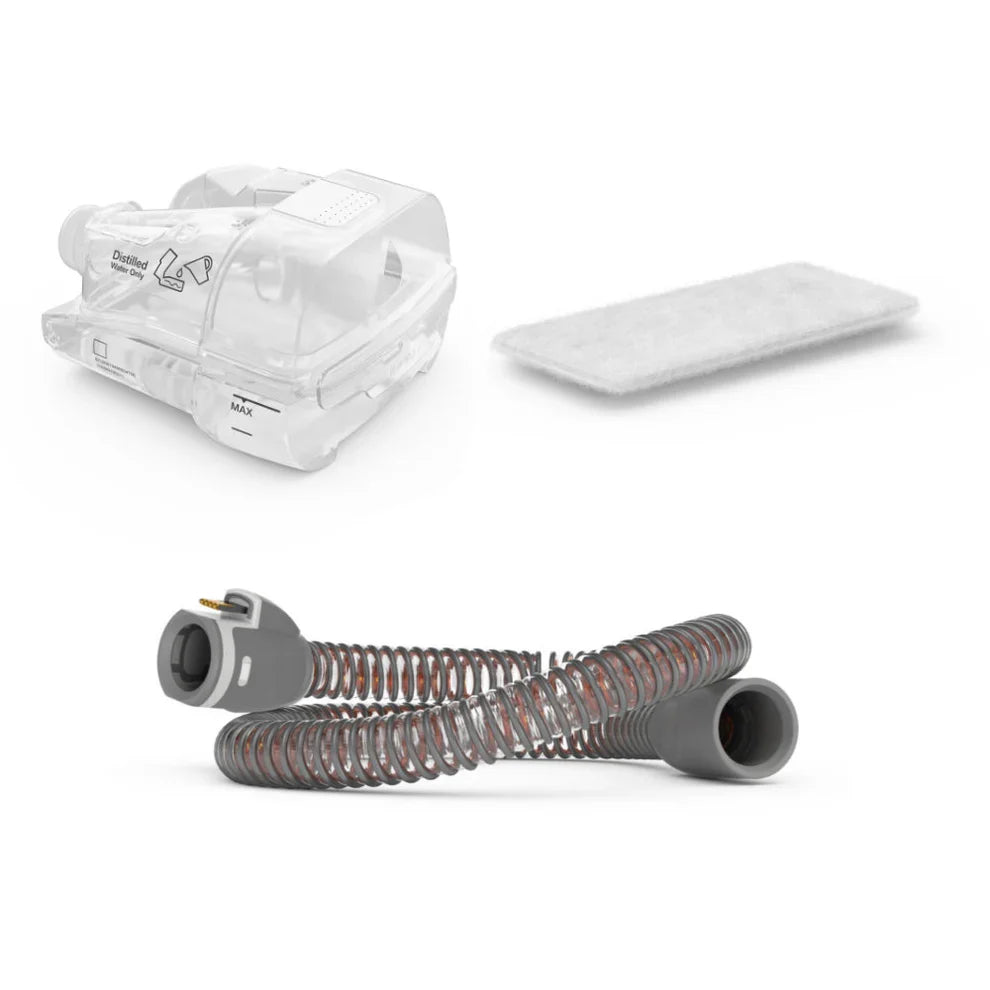
Use bottled distilled or purified water for the humidifier. If you cannot find it, plain bottled drinking water for a few nights is acceptable, then clean the tub thoroughly when you return. Waterless humidification such as the HumidX cartridges for the AirMini removes the water question entirely.

Is a travel CPAP worth it?

A full-size machine with its humidifier and power brick weighs around 1.5 to 2 kg and needs its own bag. The ResMed AirMini AutoSet weighs about 300 g, fits in a jacket pocket and uses the same AutoSet algorithm as the AirSense range. Its trade-offs are the dedicated mask setup packs, which limit mask choice to the AirFit P10, N20, N30 and F20 families, and waterless humidification instead of a heated tub. Frequent flyers and people who travel for work within the GCC usually find a second, travel-sized machine pays for itself in sleep quality. Compare current options in the travel CPAP collection and read our AirMini support page for setup steps.

Packing list

  • Machine, power supply and the correct plug adaptor
  • Mask, spare cushion and a short tube if your machine supports it
  • Filters for the trip length, since dust levels vary
  • Prescription copy and the device user guide
  • Extension lead for hotels with badly placed sockets

If you are visiting the UAE rather than leaving it, we deliver machines, masks and supplies across the Emirates and to Saudi Arabia, Kuwait and the GCC. Airline details above are taken from the carriers' published policies and may change. Confirm with your airline before you fly.

Leave a comment

Your email address will not be published. Required fields are marked *